


Table of Contents
- Understanding Your Boat’s Specifications
- Determining the Appropriate Trailer Size
- Choosing Between Bunk and Roller Trailers
- Material Considerations for Trailer Durability
- Evaluating Axles and Suspension Systems
- Ensuring Proper Tires, Brakes, and Lighting
- Assessing Towing Vehicle Compatibility
- Additional Features for Enhanced Convenience
Transporting your boat safely and efficiently starts with choosing the right trailer for your specific needs. A well-matched trailer protects your investment and makes every trip to and from the water much easier. Before deciding, compare key features, evaluate build quality, and understand your vehicle’s towing capacity. If you are also exploring versatile hauling options, browsing selections like cargo trailers Delaware can give you additional flexibility for both personal and business use.
Selecting the ideal boat trailer goes beyond simply matching size and weight. Differences in materials, braking systems, axle configurations, and loading features all affect performance and safety. Taking the time to understand these factors helps ensure smoother transport, better durability, and a more stress-free boating experience overall.
Mismatched trailers can risk both your boat and your safety. Investing effort in evaluating all aspects of your trailer options will pay off with more enjoyable and reliable boating experiences. Properly pairing your boat and trailer also makes launching and retrieval at ramps easier, saving you time and hassle on busy weekends.
As you research, reference resources like BoatUS’s guide on trailering for practical tips and guidance on transport safety and maintenance. A deeper understanding will help you avoid common pitfalls and better protect your boat on every journey.
Understanding Your Boat’s Specifications
Knowing your boat’s accurate dimensions and weight is the first step in choosing an appropriate trailer. Do not just consider the published dry weight; include the added weight of fuel, gear, batteries, motors, and any customized equipment. Ignoring this fundamental step can result in overloading your trailer, which creates hazards during towing and can cause structural failure.
Determining the Appropriate Trailer Size
The trailer must be longer than your boat by at least a few feet and exceed your boat’s total loaded weight. Choosing a trailer that is too small presents risks of instability and can damage both the trailer and the hull. Oversized trailers often make towing cumbersome, causing issues with maneuverability and storage. For most recreational boats, a trailer with a small excess in both length and capacity is the safest bet.
Choosing Between Bunk and Roller Trailers
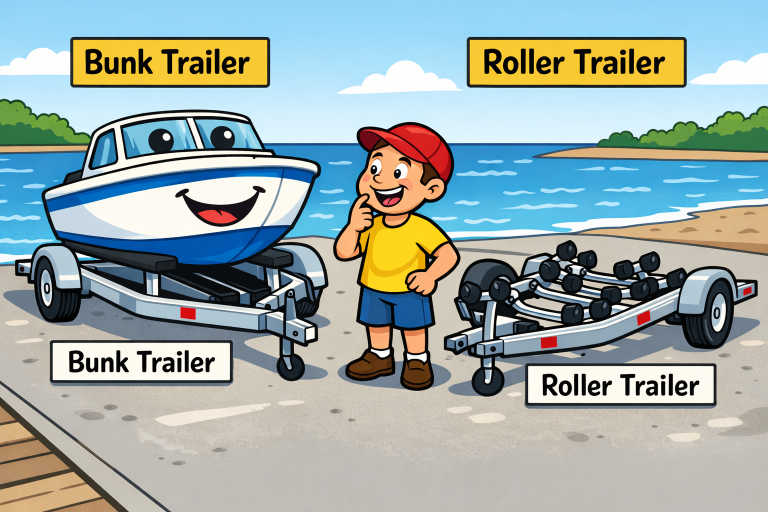
Bunk and roller trailers both offer distinct advantages. Your choice should be guided by your boat’s hull type and your usual launching environments.
Bunk Trailers
Bunk trailers use carpeted or padded bunks to cradle the hull. They provide continuous support, making them excellent for fiberglass hulls and boats that are primarily launched in deep water. Their simple design means easier maintenance and generally lower costs.
Roller Trailers
Roller trailers use rotating rollers to support and help launch the boat. They excel in shallow ramps or slippery launch conditions, allowing the boat to easily slide on and off the trailer. They are ideal for larger or heavier boats but can require additional maintenance to ensure all rollers operate smoothly.
Material Considerations for Trailer Durability
Trailer construction material affects not only weight and corrosion resistance but also overall maintenance needs.
- Galvanized Steel: Heavier and more robust, galvanized steel trailers resist saltwater corrosion and suit those who boat frequently in coastal regions. Regular rinsing after salt exposure helps to maximize service life.
- Aluminum: This material is naturally corrosion-resistant and much lighter than steel, making towing easier and reducing fuel consumption. Aluminum is typically more expensive but requires far less upkeep.
- Painted Steel: While more affordable, painted steel trailers are best limited to freshwater use. Without rigorous maintenance, they are susceptible to rust.
Evaluating Axles and Suspension Systems
Single-axle trailers are best for small boats and make maneuvering easier, especially in tight areas. For heavier vessels, tandem axle trailers add stability, better distribute weight, and provide a smoother ride. Your choice of suspension affects ride quality and longevity. Leaf springs are traditional and cost-effective, but require more frequent checks. Torsion axles deliver a smoother ride and need less maintenance, but come with a higher upfront investment.
Ensuring Proper Tires, Brakes, and Lighting
Tires must match the trailer’s load rating and be checked for wear before every trip. For boats over 3,000 pounds, reliable trailer brakes become necessary, both for legal compliance and safety. Lights should meet Department of Transportation requirements and remain visible and operational even in wet conditions. Regularly inspect all running lights and brake lights to ensure roadworthiness.
Assessing Towing Vehicle Compatibility
Ensure your chosen trailer pairs well with your vehicle by verifying the gross combined weight rating, hitch type, and braking system. Review your vehicle’s towing capacity as provided in the owner’s manual before purchasing a trailer, and remember to factor in the combined weight of the boat, trailer, and all equipment. Installing the appropriate hitch and brake controls will keep you in compliance with state road laws.
Additional Features for Enhanced Convenience
Certain features can greatly simplify the process of launching, retrieving, and transporting your boat. A quality winch will help you load the vessel smoothly, even when working alone or in adverse conditions. Guide-ons serve as visual aids that steer your boat onto the trailer correctly, especially in crosswinds or strong currents. Always carry a spare tire and a tool kit so you are prepared for unexpected roadside issues.
By thoughtfully evaluating these considerations, you will be able to purchase a boat trailer that not only ensures the safety and longevity of your boat but also boosts your overall boating enjoyment for years to come.
