


Central Florida homeowners know that the weather can change quickly. One week may bring intense afternoon storms and saturated lawns, while another brings dry conditions that make the yard look normal. For homes on septic systems, those swings can affect how wastewater moves through the tank and drain field.
Reliable care starts with understanding the system and responding early to changes. For homeowners seeking septic tank maintenance Orlando, FL, A & L Septic Products, Inc. is a relevant local resource. Its About page describes septic maintenance, tank cleaning and pumping, concrete tank manufacturing, grease traps, replacement lids, and installation support for customers in Orlando and nearby Central Florida communities. That experience across routine service, equipment, and installation helps homeowners evaluate everyday maintenance needs as well as larger repair or replacement decisions.
Why Weather Matters to a Septic System
A septic system has two primary jobs. The tank holds wastewater long enough for solids to settle and scum to rise, while the drain field releases treated liquid into the surrounding soil for further filtering. The drain field needs soil with sufficient open space to gradually accept the liquid.
Heavy rain, high groundwater, and oversaturated soil can reduce the drain field’s ability to absorb wastewater. Weather does not automatically cause a septic failure, but it can expose an overloaded, damaged, or poorly maintained system. Septic systems are especially important in Florida, where they serve a substantial portion of residents.
Central Florida’s Wet and Dry Seasons
Summer storms can leave soil around a drain field wet for extended periods. When rainfall occurs repeatedly before the ground has time to drain, wastewater may move more slowly through the system. Dry spells can create the opposite impression. A struggling drain field may seem fine when the soil is dry, even though an underlying issue is still developing.
Watch the septic area throughout the year. Standing water, soft or spongy ground, sewage-like odors, slow drainage inside the home, or unusually green grass over one part of the yard can all deserve attention. These symptoms are not always proof of a drain field failure, but they should not be ignored.
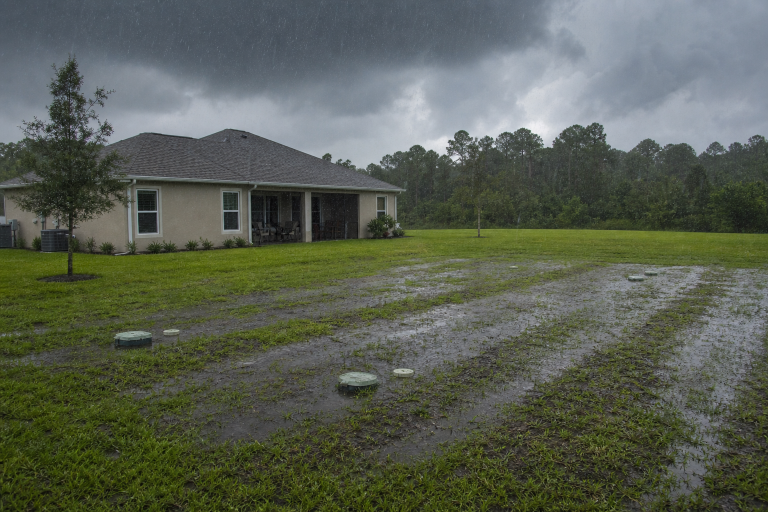
How Rain Can Stress a Drain Field
A drain field works best when surface water is kept away from it. Roof runoff, sump discharge, pool drainage, and irrigation can add unnecessary water to already wet soil. This can slow wastewater treatment and create conditions that lead to odors, wet spots, or backups.
Keep gutters and downspouts directed away from the tank and drain field. Adjust irrigation after periods of frequent rain, and do not use the septic area as a convenient place to drain a pool or wash large amounts of equipment. The EPA’s septic system care guidance also recommends keeping rainwater drainage systems away from the drain field.
Smart Water Use During Stormy Weather
Indoor water use matters even more when the surrounding soil is saturated. A large volume of water entering the tank in a short period can move solids toward the outlet and place extra demand on the drain field. Spread water-heavy chores across the week instead of doing everything in one day.
- Repair dripping faucets and running toilets promptly.
- Run the dishwasher and washing machine at separate times.
- Spread laundry loads over several days.
- Use reasonable irrigation settings during wet weather.
- Consider high-efficiency toilets, showerheads, and appliances when replacement is practical.
What Should Never Go Down the Drain
Only wastewater and toilet paper should regularly enter a septic system. Cooking grease, paper towels, wipes, paint, medications, harsh chemicals, feminine hygiene products, cat litter, and coffee grounds can clog pipes, interfere with beneficial bacteria, or add solids that require more frequent pumping.
Garbage disposals can also increase the amount of food waste and grease entering the tank. Limit their use when possible, and keep covered trash containers near toilets and kitchen work areas so non-septic-safe materials have an easy alternative destination.
A Practical Maintenance Schedule for 2026
Keep records of pumping dates, inspections, repairs, permits, tank location, and drain field diagrams. Household systems should be inspected at least every three years and pumped every three to five years. The schedule depends on household size, tank capacity, water use, and solids buildup. Systems with mechanical parts may need more frequent checks. Schedule routine service before heavy storms. A professional can assess tank access, levels, condition, components, and drain field performance.
Warning Signs That Need Quick Attention
Slow drains, gurgling toilets, wastewater backups, sewage odors, wet patches near the drain field, or damaged tank lids all warrant prompt action. Several smaller warning signs occurring together can point to a larger problem. If sewage surfaces or backs up indoors, reduce water use immediately, keep people and pets away from affected areas, and contact a qualified septic professional.
Protecting the Tank and Drain Field From Yard Work
Do not park vehicles or heavy equipment over the tank or drain field, as it can compact soil, limit wastewater absorption, and damage pipes. Before installing structures, locate the septic system. Use grass as a safe cover; avoid trees, large shrubs, and impermeable surfaces nearby, since roots can interfere, and soil needs oxygen and moisture exchange for proper treatment.
Florida Rules and Local Records
Keep permits, inspection reports, service receipts, and site diagrams with other home records. Septic permitting and inspection responsibilities can vary by county and system type. Homeowners should verify current requirements before repairing, expanding, or installing a system. The Florida septic systems resource provides current program information and directs residents to the appropriate permitting authority.
Common Questions From Central Florida Homeowners
How Often Should a Septic Tank Be Pumped?
Many households fall within the three-to-five-year range, but a larger family, smaller tank, heavy water use, garbage disposal use, or mechanical system may require a shorter interval.
Can Heavy Rain Cause a Septic Backup?
Heavy rain can slow absorption in saturated soil and reveal existing drain field or maintenance problems. Rain may not be the sole cause, but it can add stress to a weak or overloaded system.
Is a Septic Additive Necessary?
Routine additives are not a substitute for pumping, inspections, careful water use, and proper disposal habits. Ask a qualified professional before using products that claim to replace maintenance.
What Should Be Done After Flooding?
Avoid standing water near the septic area, reduce water use, keep children and pets away, and seek guidance from a professional or local agency before resuming normal use.
Final Takeaway
Central Florida weather can influence septic performance, but consistent habits make the greatest difference. Sensible water use, clean drain practices, protected yard space, accurate records, and timely service can help prevent avoidable problems throughout 2026 and beyond.
