


Key Takeaways
- Recycled plastics and rubber are increasingly used to create more sustainable and long-lasting pavements.
- Innovations like permeable and cool pavements help cities better manage stormwater and mitigate heat islands.
- Digital monitoring and self-healing materials are minimizing maintenance, saving costs, and extending pavement life.
With urban populations rising and cities expanding, the importance of sustainable infrastructure has reached record highs. Modern pavements not only need to withstand constant wear and tear but also reduce their environmental impact. As traditional materials experience limitations in longevity and ecological performance, a new era of pavement innovation is emerging. These innovations offer viable paths for cities and businesses seeking both durability and sustainability in their projects, whether they are planning large municipal roadways or smaller initiatives such as parking lot paving La Porte, IN, or growing commercial districts.
Communities around the world are now recognizing that forward-thinking pavement designs are essential for the overall health and adaptability of their environments. Sustainable pavement technologies strive to balance ecological considerations, cost-effectiveness, and reliable performance, creating infrastructure that is both resilient and environmentally responsible. These advancements span from materials science breakthroughs to practical, real-world deployment, offering new hope for solving some of the most pressing urban challenges.
Recycled Materials: Turning Waste into Roadways
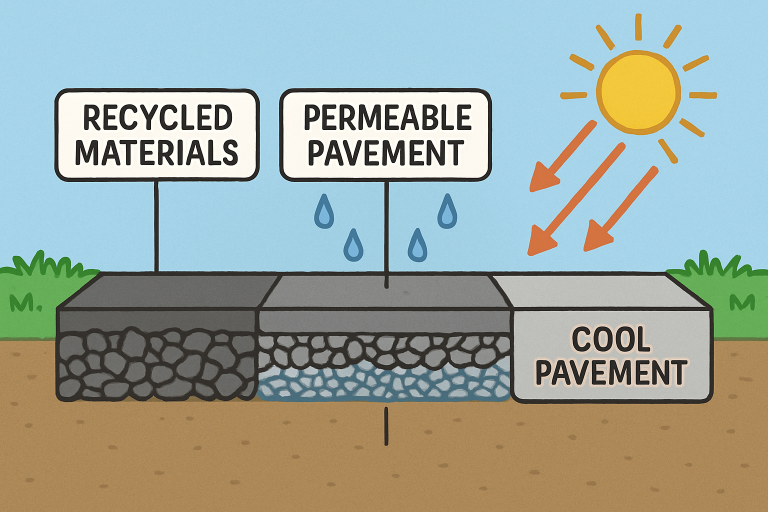
Pavement construction is undergoing a revolution as recycled materials move from experimental trials to mainstream adoption. Incorporating recycled plastics and shredded tires into asphalt can significantly improve strength and resilience. For example, asphalt mixed with processed rubber from used tires not only reuses waste that would otherwise end up in landfills but also enhances road durability and dampens traffic noise. Roads built with recycled plastic waste exhibit greater longevity while reducing environmental impact. These developments demonstrate the circular potential of waste repurposing in large-scale infrastructures.
Permeable Pavements: Managing Stormwater Naturally
Stormwater management is a challenge for many urban centers. Traditional pavements increase runoff, which can overwhelm drains and contribute to flooding. Permeable pavements resolve this issue by allowing water to seep through the pavement surface and into the underlying layers. Cities such as Portland have pioneered the widespread use of permeable pavements to manage rainfall efficiently, recharge groundwater, and improve overall water quality. These installations benefit both the city and the natural environment, positioning permeable pavements as a staple for modern, sustainable urban planning.
Cool Pavements: Combating Urban Heat Islands
Urban heat islands occur when clustered buildings and pavement surfaces trap heat, making cities significantly warmer than surrounding rural areas. Traditional dark pavements absorb sunlight while radiating warmth throughout the day and night, compounding the effect. Cool pavements are engineered with lighter colors or reflective materials to deflect heat. The U.S. Environmental Protection Agency (EPA) notes that these surfaces help reduce surface and air temperatures, thus lowering cooling costs and mitigating strain on energy grids. Integrating cool pavements supports more comfortable urban spaces and helps cities meet climate adaptation goals. More information can be found on the EPA’s page on Using Cool Pavements to Reduce Heat Islands.
Digital Monitoring: Enhancing Maintenance Efficiency
Digital technology now plays a pivotal role in infrastructure management. New systems that use embedded sensors and real-time analytics provide city officials with continuous updates on pavement conditions. Advances such as Digital Twin-Driven Pavement Health Monitoring can identify areas of deterioration much earlier than manual inspections, enabling timely, cost-effective maintenance. The impact: longer-lasting roads and less frequent, disruptive construction. By leveraging these digital solutions, cities save resources while ensuring safer, more reliable roadway networks.
Self-Healing Materials: Extending Pavement Lifespan
Self-healing pavement materials are a groundbreaking innovation that could drastically reduce the need for repairs. Engineered to heal minor cracks autonomously when exposed to heat or water, these materials extend pavement life and ease the burden on municipal budgets. Several pilot projects in Europe and the United States have demonstrated the promise of self-healing asphalt, resulting in reduced maintenance interventions and improved service life. As research continues, these materials are poised to become an essential asset in future infrastructure systems.
Geocells: Reinforcing Pavement Structures
Geocells, such as Neoloy Geocells, offer a structural approach to sustainability. These honeycomb-like frameworks are filled with soil or aggregate and installed beneath pavement surfaces, distributing loads more evenly and improving stability, especially over weak ground. Geocells minimize the required thickness of pavement layers and enhance their overall durability. This not only saves material costs but also reduces the carbon footprint associated with new pavement projects. The adoption of geocells supports long-term sustainability and performance in transportation infrastructure.
Conclusion
The push for sustainable pavements is marked by a growing awareness of environmental responsibility and a drive for engineering excellence. By embracing innovations such as recycled materials, permeable pavements, reflective surfaces, smart maintenance technologies, self-healing compounds, and advanced reinforcement systems, modern infrastructure can meet the evolving needs of urban environments while preserving the planet’s resources. These sustainable solutions are paving the way for more resilient, efficient, and eco-friendly communities worldwide.
