

Key Takeaways
- Hidden shower leaks can appear outside the shower before they become visible inside.
- Musty odors, loose tile, cracked grout, soft flooring, and stains below the bathroom are all warning signs.
- The timing and location of moisture can offer clues about whether the issue involves fixtures, the drain, plumbing, or waterproofing.
- Prompt attention can help limit damage to drywall, subflooring, insulation, trim, and adjacent rooms.
A shower can leak for weeks or months without leaving a puddle on the bathroom floor. In Cornelius, NC, where humid weather can make a damp bathroom take longer to dry, small changes to tile, trim, and nearby rooms deserve attention. Knowing the early clues can help homeowners decide when to install shower leak detection before moisture reaches additional building materials.
A dramatic plumbing failure does not always cause hidden water damage. A worn seal, a loose drain connection, failed caulk, or water escaping at the shower door can allow repeated moisture into walls or flooring. The visible symptom may appear well away from the actual entry point.
Why Shower Water Damage Often Stays Hidden
Tile, grout, caulk, and shower bases create a finished surface that can conceal what is happening behind or beneath them. Water can move through openings around fixtures, at corners, at floor transitions, and in drain assemblies. It may then travel along framing, pipes, or the subfloor before becoming visible as a stain or a soft spot.
A shower floor that looks dry after use is not proof that the surrounding structure is dry. Repeated exposure to small amounts of water can gradually weaken materials, particularly where moisture limits airflow or is trapped behind a finished wall.
When the finished surface needs repair or replacement, comparing approaches from local tile companies can help homeowners ask better questions about waterproofing, drainage, transitions, and the condition of materials below the tile.
Early Signs That Deserve a Closer Look
1. A Musty Smell That Keeps Returning
An earthy or musty odor may indicate that moisture is lingering in an enclosed area. Notice whether the smell remains after the bathroom has had time to dry, rather than covering it with sprays or air fresheners. Mold can grow where moisture is present, so controlling the water source matters as much as cleaning visible growth.
2. Cracked, Missing, or Darkening Grout
Grout wear alone does not confirm a leak, but recurring cracks or gaps should not be ignored. Check corners, the wall-to-floor joint, the threshold, and tile around fixtures. If a repaired area repeatedly breaks down, movement or moisture below the surface may be contributing to the problem.
3. Loose, Hollow-Sounding, or Shifting Tile
A tile that moves, feels loose, or sounds different from the surrounding tile can signal a weakened bond. Use a gentle visual and touch inspection only. Pulling on tiles or removing them without a plan can enlarge the damaged area and make it harder to identify where water entered.
4. Soft Flooring or Swollen Baseboards
Check the floor next to the shower, toilet, vanity, and bathroom doorway. Swelling, cupping, discoloration, or a spongy feeling underfoot may indicate moisture below the finished floor. Avoid repeatedly walking over a weakened area, particularly if it feels increasingly soft.
5. Stains on a Ceiling or Wall Below
If the bathroom is above another room, inspect the ceiling below it. Yellowing, bubbling paint, peeling finishes, soft drywall, or a spreading stain can all point to a water issue. The stain does not necessarily identify the exact leak location because water can travel before it becomes visible.
Common Sources of a Hidden Shower Leak
- Fixtures and supply lines: Moisture near a showerhead, valve trim, handle, or pipe connection may appear while the water is running or even when the shower is off.
- Drain connections: A problem near the drain may be more noticeable after water begins draining from the shower floor.
- Shower pan or base: Damage beneath the finished floor can allow water to reach subflooring or framing.
- Tile joints and sealant: Open corners, failed caulk, and gaps at wall transitions can direct water beyond the visible surface.
- Doors and curbs: Water that escapes during normal shower use can affect flooring outside the enclosure.
A Simple Home Check for Early Clues
- Dry the shower, walls, threshold, and nearby floor completely.
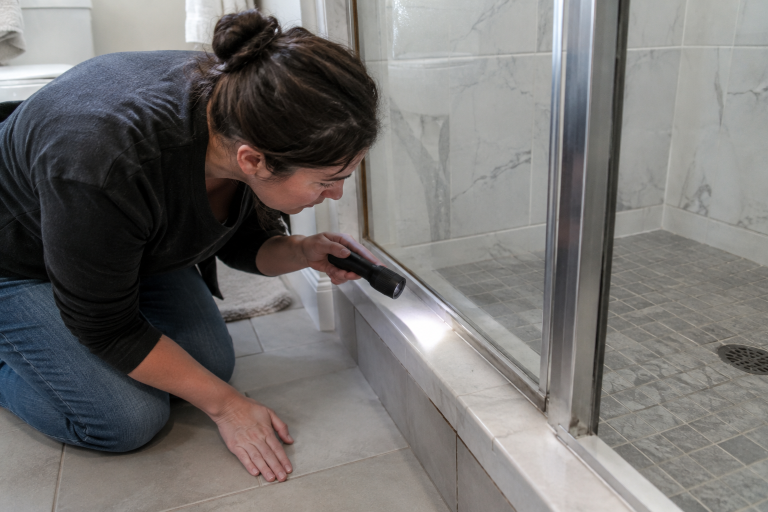
- Use a flashlight to inspect corners, joints, grout lines, fixtures, and the drain area.
- Check the opposite side of the shower wall for bubbling paint, stains, or swollen trim.
- Look at the ceiling below the bathroom if there is a finished room underneath.
- Note whether changes appear only while the shower is running, after the water drains, or when the shower has not been used.
- Photograph and date visible changes so the pattern is easier to explain during an evaluation.
How to Narrow Down the Possible Source
A timing repair plan: Stains that appear only when the showerhead or valve is running can indicate a fixture or supply-line issue. A problem that develops after the shower floor fills and drains may involve the drain area or shower base. Water appearing outside the enclosure after regular use may indicate a door, curb, threshold, or surface drainage issue.
It is reasonable to check a water meter when all fixtures and water-using appliances are off, since continued movement may indicate a plumbing leak. However, do not treat that result as a complete diagnosis. Avoid opening walls, removing tile, or performing invasive tests without a clear reason and a plan for repair.
When a Small Repair May Not Be Enough
Replacing a bead of caulk or repairing isolated grout can be appropriate when damage is truly limited to the surface. A broader assessment is more important when the same repair fails repeatedly, tile becomes loose again, an odor persists after drying, or drywall and flooring feel soft. Visible mold-like growth beyond ordinary surface mildew, as well as damage in an adjacent room or on a lower ceiling, also deserves prompt attention.
Indoor moisture control is central to limiting mold growth, and water-damaged areas should be dried quickly after the source is corrected. Cleaning without addressing the leak can allow the underlying issue to return.
What to Do When Water Damage Is Suspected
- Limit shower use if stains are spreading, flooring is soft, or a ceiling below is affected.
- Remove rugs, bath mats, baskets, and other items that can retain moisture.
- Improve airflow with an exhaust fan that vents outdoors, an open door, or safe ventilation.
- Take photographs before cleaning, repainting, or making cosmetic repairs.
- Seek an evaluation when signs continue, spread, or involve concealed materials.
- Ask whether the proposed repair addresses the water entry point rather than only the visible damage.
Prevention Habits That Help Protect the Shower
Run the bathroom exhaust fan during showers and afterward; keep shower corners and thresholds clean; and replace failing caulk before gaps widen. During routine cleaning, inspect grout, tile, and fixture openings for changes. Direct water toward the drain and keep an eye on water that splashes or runs beyond the shower door. Small changes are usually easier to investigate before a stain or soft floor develops.
Common Questions Homeowners Ask
Can a shower leak exist without visible water?
Yes. Moisture can remain behind walls, below flooring, or beneath a shower base without forming a visible puddle.
Does cracked grout always mean there is a leak?
No. It can be a surface maintenance issue, but repeated cracking or cracking paired with odors, loose tile, or staining calls for closer inspection.
Can a bathroom fan prevent shower leaks?
A fan helps reduce humidity, but it cannot repair a failed drain, plumbing connection, shower pan, or waterproofing detail.
Should the shower stop being used?
Limit use when water is spreading, materials feel soft, a musty odor persists, or damage is visible in another room.
Conclusion
Hidden shower damage rarely improves without correcting the source of moisture. In Cornelius homes, paying attention to recurring odors, changes in tile or grout, soft flooring, and marks outside the shower can help reveal a problem earlier. Regular checks, effective ventilation, and timely action can protect both the bathroom and the surrounding rooms.
